One fair corporate culture with all the trimmings, please
Join the crew
Culture

Rocket culture reflects the people who create it. Despite our growth, the fundamentals have remained the same: there is hardly any bureaucracy, we speak about things openly, and everyone can be themselves. What is everyday life like in an environment like this, and what joy does it bring to experienced software developers? And how are corporate culture and sustainable growth actually connected?
At its best, corporate culture enables a company to succeed and helps it remain stable even when the winds blow and the snow flies around it. A strong culture is helpful especially now, when the economic growth in the IT sector that has continued for many years has slowed down. At Rakettitiede, we are still pushing forward with an annual growth rate of 9%. One of the many reasons behind this growth is a strong corporate culture.
So, what corporate culture exactly?
“Corporate culture is what happens when nobody is looking,” says corporate culture designer and expert Panu Luukka, adapting William Wolfram’s definition. The word ‘culture’ originates from the cultivation of soil. “So, when a company’s soil is in order, meaningful things happen there,” Panu says.
When the soil of Rakettitiede was sown during the founding phase, the founding members Juha, Arttu, Marko, Kalle and Jarno decided to involve all employees in shaping the activities and culture. It wasn't a completely conscious choice, but it turned out to be an excellent direction in the end.
“Our principle from the very beginning was to build a culture on top of how it is natural for our team to operate. Once we found our own path, we made a conscious decision to develop and grow as a company in precisely this way,” says Juha, CEO of Raketti.
What does Raketti’s corporate culture look, feel and sound like in a consultant’s everyday life? How do we ensure that the culture truly reflects the people who create it?
Trust, fairness, transparency – and a shared future?
According to Juha, the Raketti culture crystallises in openness and honesty.
He describes the Rakettitiede crowd as “a group of friends that has slowly grown”. Over the years, the group of friends has expanded as around fifty rocket scientists have put on their spacesuits. Right from the first handshake, new employees are introduced to the cosy soul of the company.
It is easy to get to the core of things when everyone at Rakettitiede, from consultants to founders and the office team, is present for one another in daily life.
“Every employee – both past and present – has shaped our culture through their own actions. Getting to know each other from the very first day builds the foundation for a confidential and open line of communication. This wouldn't be possible if we had a lot of bureaucracy and gates around the management,” Juha says.
Raketti’s consultants Edvard “Ed” Majakari (rocket scientist #20), Pawel Defée (rocket scientist #12) and Rostislav Galimskii (rocket scientist #52) confirm that Juha is speaking the absolute truth.
Consultants speak out – 5 facts about Raketti’s culture
#1 Minimal bureaucracy
A consultant’s life is straightforward when the employer focuses on the essentials.
From a consultant’s perspective, paperwork is kept to a minimum – meaning only a few necessary processes. “Critical matters are handled impeccably, but there are no unnecessary forms for a consultant to fill out,” Ed says.
If a rocket scientist needs a new computer, for example, they can report it directly to Mira, the coordinator on the bridge, and she will handle the task in no time without any pointless questions.
Often, a consultant’s working environment on the client’s side is more complex than the mothership. That is why Pawel also appreciates simplicity in his daily work, where he resolves client problems involving embedded systems. “Minimised bureaucracy reduces the cognitive load of work, and I can dedicate all my energy to client work,” he says.

According to rocket scientist #20, Ed, there is just the right amount of bureaucracy at Raketti from a consultant's perspective – meaning very little. He also appreciates the transparency: “You don’t have to guess what the management is up to over there.”
#2 Strong ownership of one's own work
“The consulting profession is independent expert work. It is not suited to having home support dictate exact procedures that cannot be adapted for different clients,” says Pawel.
Raketti’s culture makes it possible for consultants to carry out their work in the way they see fit, as long as it serves the client.
“Rocket scientists are an independent bunch and take the initiative so that if a problem arises, they will solve it,” Ed says and continues: “And if a problem is too big to solve alone, help is readily offered and received.”
#3 Transparency, honesty and openness – in absolutely everything
It is possible to foster strong ownership when the company has a transparent and open culture. This is especially evident in the actions of the management in everyday life.
Ed says he never has to guess “what the management is up to over there”. This is ensured by the weekly newsletter sent to consultants on Fridays, monthly reviews of the company’s overall situation, “caretaker” sessions, and joint online coffee breaks on Fridays with the whole team. “It builds appreciation and trust so that I can focus on my client work in peace. The home support remains in the background and makes itself known when needed,” Ed says.
According to Ed, Raketti’s management stands out particularly in how equal they are with the employees.
“Conversations with management feel just like conversations with a good friend,” Ed says. Rostislav agrees: “It also feels like they are always on my side, no matter what situation arises with a client or in my daily life.”
#4 Freedom to be yourself and influence daily life
Everyone is allowed to shine in their own way. “The culture is nerdy in a good way, and there are many different personalities in this group,” says Rostislav.
“We like technology, and that’s what connects us all. The client assignments are demanding enough that you need intrinsic motivation to solve technical issues. It is refreshing to have people around you who share the same interests,” Rostislav continues.
Indeed, rocket scientists have all kinds of interesting hobbies that fuel work requiring complex problem-solving.
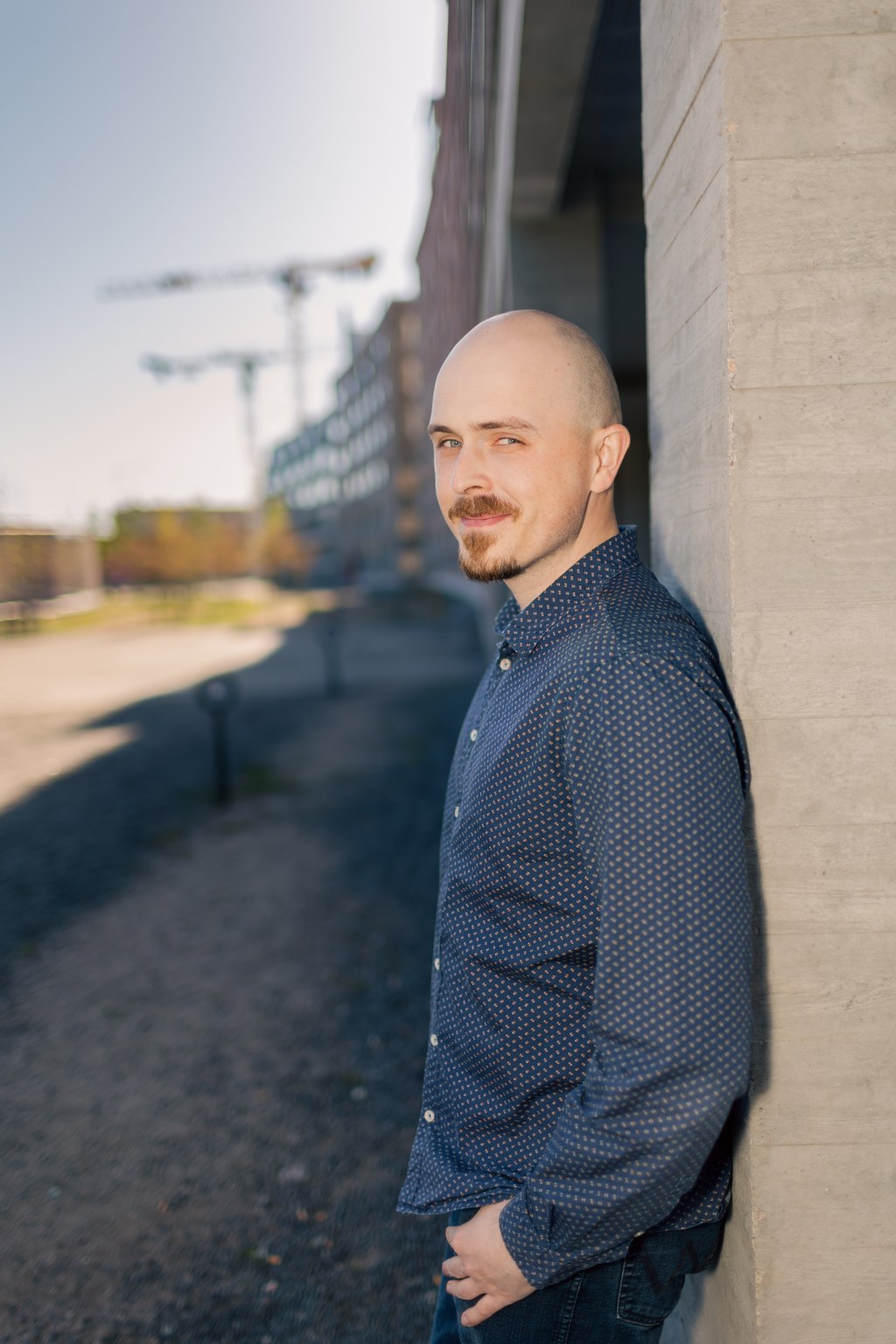
Ros, rocket scientist #52, describes the rocket culture as nerdy in a good way. “It is refreshing to have people around you who share the same interests,” he says.
#5 Opportunity to influence the company’s growth
If the corporate culture has been shaped to reflect its people, how much have the consultants been able to influence Raketti’s growth and design? Quite a lot.
“If you speak up and suggest trying to do something differently, the answer is often positive,” says Pawel, who has been in Raketti’s orbit for eight years now. “Even though new people and functions have joined over the years, different people and needs have been well accommodated here,” he continues.
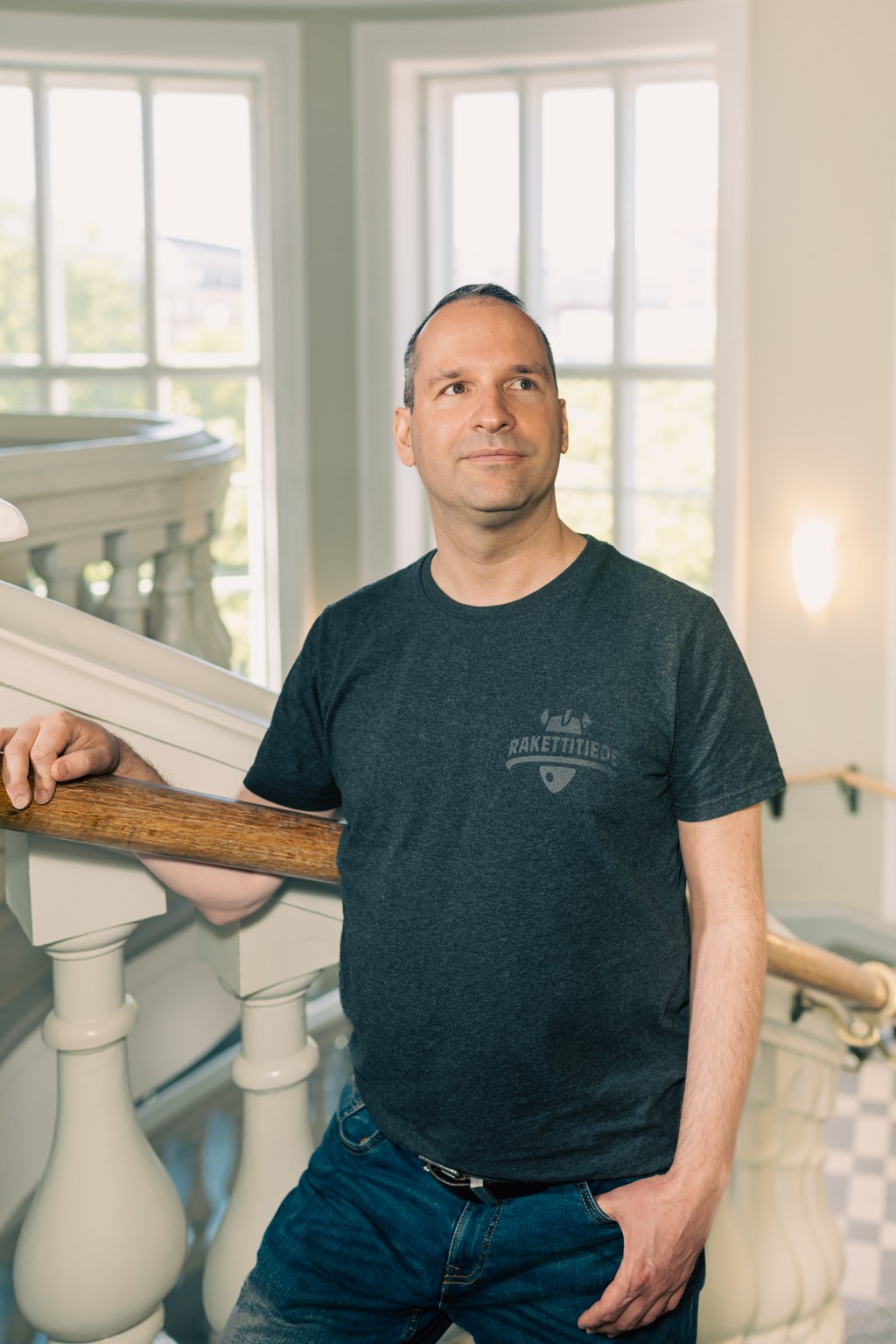
Consultants are listened to, and everyone has the opportunity to make an impact. “If I want to try doing something in a new way, the answer is often positive,” says Pawel, rocket scientist #12.
Indeed, culture has a massive impact on employee retention: when people feel ownership of the company’s operations and culture, they are unlikely to leave.
Consultants have been involved in thinking about what could be done better. For example, according to Ed, the caretaker activities started from the consultants' needs and ideas, which the management warmed to almost immediately. “It feels good to have an impact on daily operations,” Ed says.
It seems that at the core of Raketti’s culture is a healthy dose of common sense.
“We listen to what the consultants need, what kinds of things interest them and where they are struggling. Then we respond to these in the necessary way,” Juha summarises.
Is it all just a coincidence?
“A clearly articulated and led culture enables a better working life for employees,” says corporate culture designer and expert Panu Luukka, who knows the pitfalls of corporate cultures like the back of his hand.
Even though the cornerstones of Rakettitiede’s culture were not set in stone when the company was founded, building it requires conscious daily actions to keep the rocket-like atmosphere alive year after year. Therefore, the culture has had to be consciously managed to serve as a competitive advantage.
Culture is managed primarily by articulating it clearly and living it out.
“When an employee feels there is a stated narrative of what the company is like, and it is also genuinely true, they want to contribute their skills and willpower to the company. Thanks to a clearly articulated and led culture, people know how they need to act,” Panu says.
How can you tell if a company’s culture is strong and truly a competitive advantage?
“It is built around a distinctive, clear and coherent story that runs through everything the company does. It feels different and evokes emotions,” Panu says. “And if you want the culture to evolve with the people, it is important to remember the dialogue of interaction,” he reminds.

Raketti's founders did not have a grand vision, let alone culture maps – they simply lacked a workplace where they themselves would want to work. “Once we found our own path, we made a conscious decision to develop and grow as a company in precisely this way,” says Juha, CEO of Raketti.
At Rakettitiede, culture is led and reinforced by staying closely connected to the consultants' daily lives and talking with them as much as possible.
“I believe in leading by example, so it is important to live out transparency, fairness and openness every day. It starts with simple things: I think about how each person would want to be treated and act accordingly,” Juha says.
In the future, culture will be one of the prerequisites for a company’s survival. “A company can only truly succeed if it has the right expertise and the organisation is able to utilise it. This is possible if employees feel involved in the operations, are interested in where the company is heading and also have the power to influence it,” Panu notes.
The culture grows with the company
Rakettitiede has succeeded in creating a strong culture that has grown with the company for nearly 12 years. Although a few extra wings have had to be built onto the mothership for new rocket scientists, Ed and Pawel say the vibe and way of working have remained surprisingly similar in a good way. “Being at Raketti feels cosy, like a small-company vibe in a reasonably sized company,” Ed summarises. What is the key to happiness in this regard, Juha?
“We have been good at many things because we are genuine and, in a way, also modest. We don’t pretend to be something we’re not. It’s more like ‘this is who we are, take it or leave it’. That is certainly one reason why the people who come to work for us also stay for a long time,” Juha says.