What do rocket scientists' crystal balls say in 2026?
Product development
Highlights

In February 2023, a Rakettitiede post* was published in which Arttu Ylärakkola, one of Rocket's founders, and Jyri Juujärvi, Rocket scientist #17, predicted that software development would become more rational. The hype would give way to pragmatic action. Looking at how 2025 has unfolded, many of the observations made almost three years ago have turned out to be surprisingly spot on.
Which of the predictions came true?
In 2023 we talked about how chasing trends is fading and developers are focusing more on real value. That is what has happened.
“Jyri’s and Arttu’s crystal balls have worked rather well. Autocomplete is now integrated into development environments, and agent-based tools both support and drive this idea forward,” says Joona Olkkola, rocket scientist #36. AI-assisted code generation, refactoring and documentation are already part of everyday life.
Edvard Majakari, rocket scientist 20, continues: “Agile now feels less like a hype word. Its core idea finally seems to be landing better instead of the focus being on mere rituals and form. This may be because the AI hype is no longer just racing ahead – it is running with the afterburners on. Even so, the levelling out associated with the hype is slower than I expected. Behind it are not only models updated monthly, but also new infrastructure such as MCP servers, A2A protocols and other tweaks that open up new possibilities and are sometimes genuinely useful.”
According to Joona, Jyri’s ideas about self-managing teams have stood the test of time well. In a functioning group, solutions emerge at a steady pace and unnecessary rituals are left in the background.
By contrast, one thing has not changed: the catastrophe-level nature of security predicted by Jyri. New vulnerabilities are born at the same pace as old ones are fixed. At the same time, the use of AI tools increases the need to properly understand the code that is produced. “The same mistakes are easy to repeat, especially if the output of the AI tool is not understood closely enough,” Joona notes.
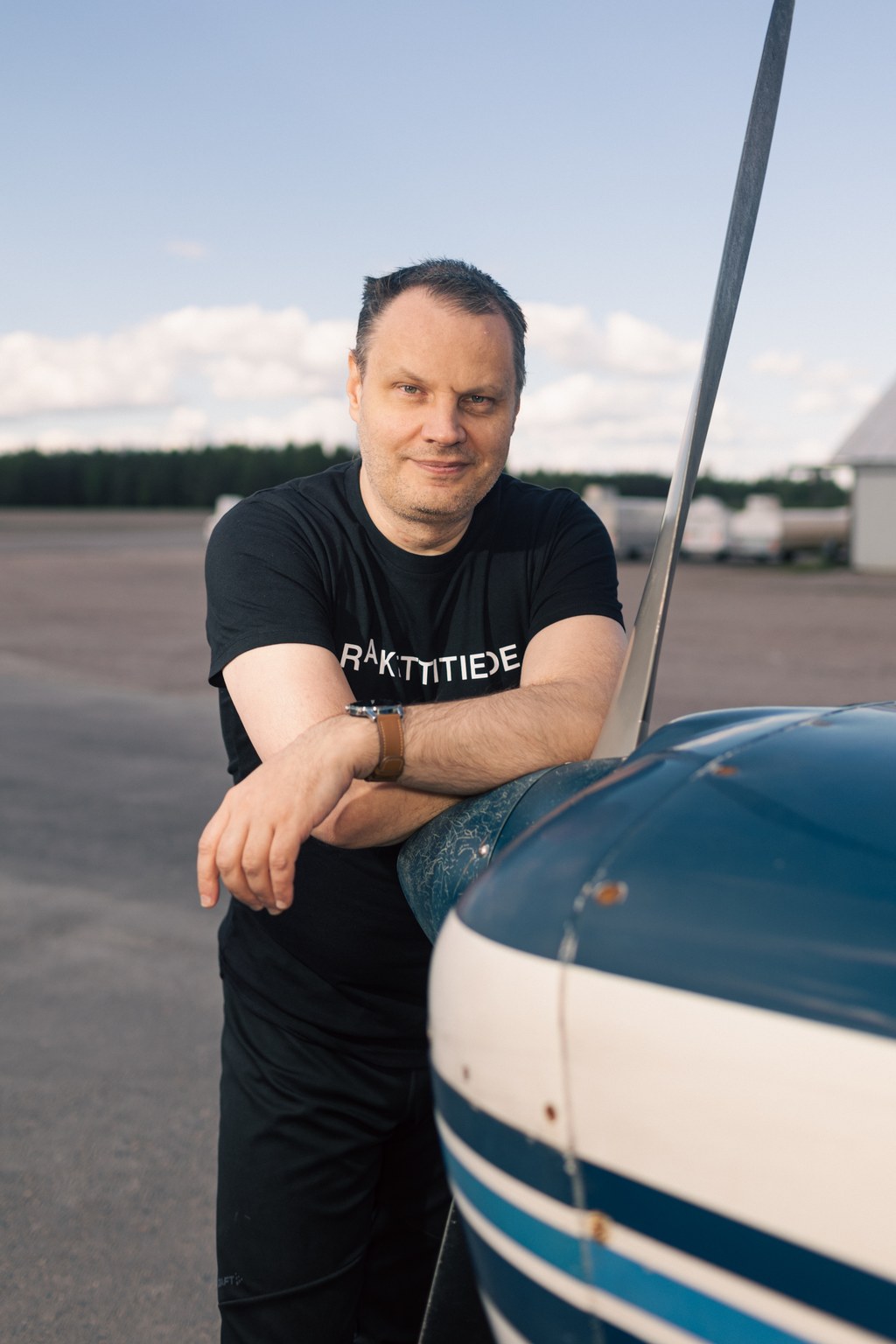
According to Ed, AI development continues, but more slowly than the hype suggests. Without models that can be trained on their own context, big leaps are still waiting.
European regulation is changing development culture
The EU’s Cyber Resilience Act (CRA) is already changing the way product development is done. Threat modelling, proactive risk assessments and planning for system resilience have moved from experiments to permanent practices. Joona sees this as welcome: security cannot be a secondary feature.
The EU’s Accessibility Act (European Accessibility Act, EAA) is bringing accessibility into focus in a new way. It is no longer an “if we have time” extra, but an essential part of both the backlog for new development and maintenance. During 2024–2025 there was a clear shift towards wanting services to work for as many people as possible.
The rapid growth of the defence sector has brought a new segment to the market. Dual-use products are everyday business, and software companies are actively looking for ways to get involved. This affects skill needs, collaboration models and the direction of product development.
According to Joona, one strengthening theme is the dependence of services on a few global players. An outage of one major service can shake entire ecosystems. “Preventing this may require making a conscious decision to offer some services from a local data centre, so that operational reliability is greater. Naturally, the dependency also has to be tested,” he says.
AI is the new black
It will be hard to avoid AI talk in the coming years too.
“Assistants integrated into application development environments are getting better and their outputs more useful than before,” Joona says. He still emphasises that ownership of the final code belongs to people: “The team’s role as custodian of the codebase and the product remains, because professional solutions are still born as teamwork.”
Ed shares the same cautious optimism: “AI development continues, but more slowly than the hype would suggest. Significant leaps will not happen as long as users cannot train models from their own context. We are still in a situation where ‘AGI is a couple of years away’, and the real productivity leap is smaller than the headlines imply.”
Ed also sees one clear technical trend: “Monoliths are making a comeback, because not every project needs heavy service meshes and FAAS solutions to work sensibly.”

According to Joona, AI tools make work easier, but responsibility for the code and understanding it stays with people and teams.
* Post 02/23:
We believe that in the future there will be less chasing after trends. Now that we have got rid of the worst of the agile hype, the next step is more pragmatic software development.
“Agile work is no longer primarily about doing things in a trendy way, but about doing them sensibly. We have straightened up and are not operating according to some Agile bible, but are choosing genuinely smart solutions,” Arttu, one of Raketti’s founders, says.
“A team that knows the code and has worked together for some time can churn out features at a good pace without trend-isms. The team agrees among itself what the code should look like and what the acceptable level of testing is,” Jyri, rocket scientist #17, explains.
Both rocket scientists believe this getting sensible is visible in almost everything.
“20 years ago the knee-jerk reaction was to store everything in an SQL database. In the 2000s that was replaced by the idea of ‘let’s store them in a NoSQL database, because I heard at the pub that Mongo is trendy’. At one time you had to code something in CoffeeScript on a MacBook to be credible. Thankfully we don’t do that any more,” Arttu reflects. Jyri adds: “Now it’s okay to be a nerd and use Windows.”
And what else can be seen in the crystal ball?
“I believe that in the basics of coding, automation will increase in the future. AI’s assisted ‘autocomplete’ will move from being a mess to something that actually works and is part of development environments“, Jyri says. “On the other hand, I fear that security will remain catastrophically poor for a long time yet.”